Guide
Farm biogas plants
A farm biogas plant turns your own manure into heat, power and fertiliser, right on your land. For the right farm it can be a smart investment. For the wrong one, it's an expensive mistake. This page covers both sides.
What is a farm biogas plant?
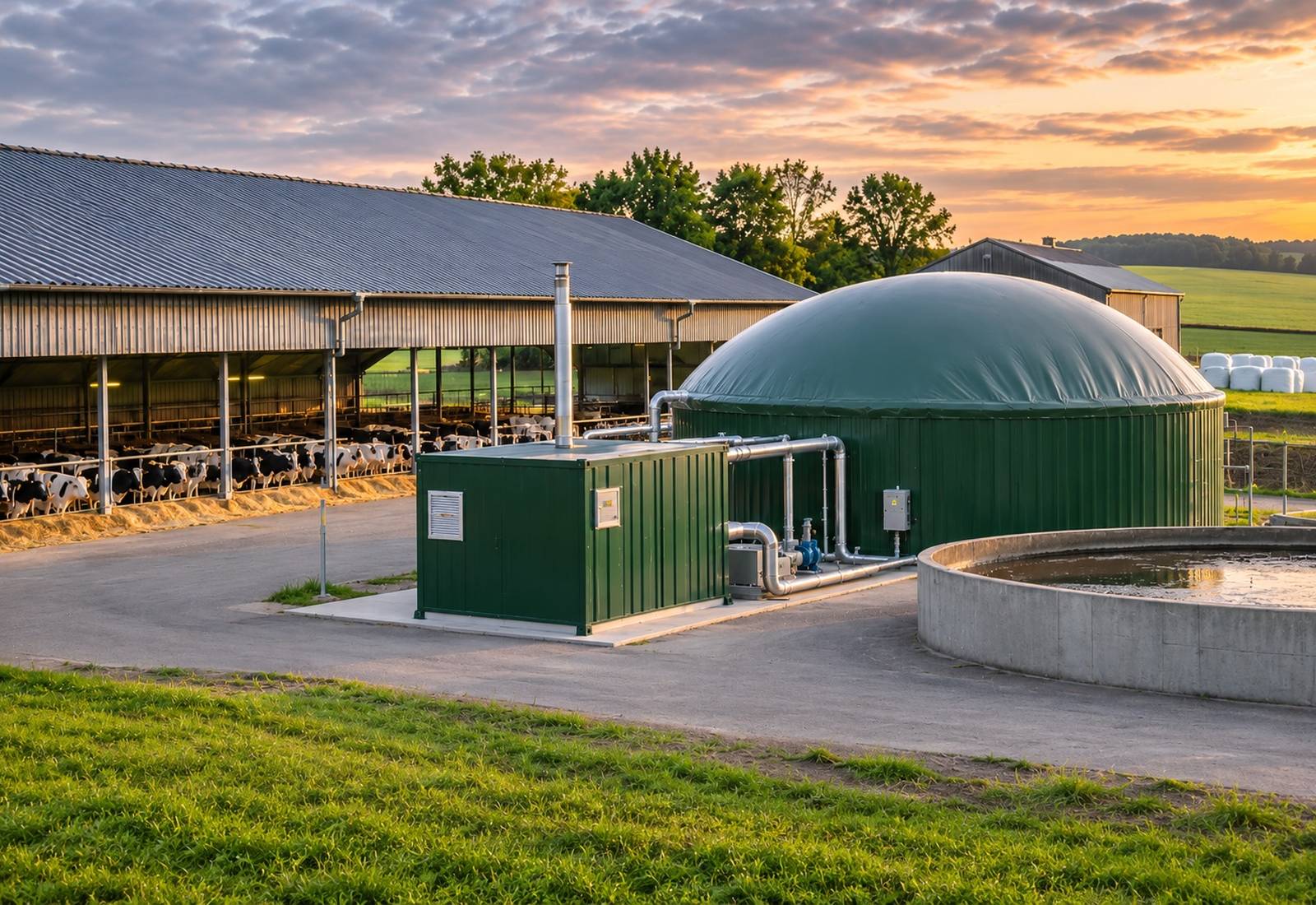
A farm biogas plant is a biogas plant built for one farm, running mainly on that farm's own manure, with the energy usually used on site. This is on-farm anaerobic digestion, and it's the big difference from central plants, which collect material from many suppliers and usually sell the energy. New to biogas? Start with our guide: What is a biogas plant?
How a farm biogas plant works
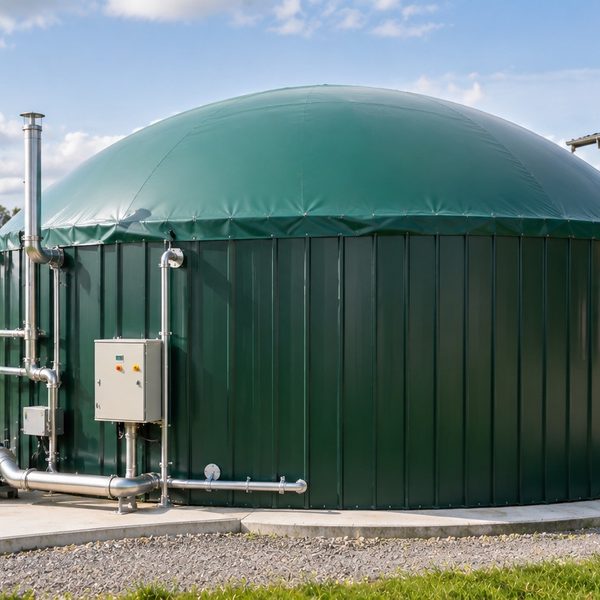
- Manure and slurry are collected in a pre-storage tank.
- They're pumped into a sealed digester, where bacteria break them down without oxygen. Depending on the farm, it's called a manure digester, a slurry digester or, on a dairy farm, a dairy digester.
- Biogas collects under the gas dome.
- A boiler or combined heat and power unit turns the gas into heat and electricity for the farm.
- The digestate goes into storage and back onto the fields as fertiliser.
The science in more detail: how anaerobic digestion works
Sizes of farm biogas plants
- Micro plants. Compact, often container-based systems for smaller herds, running mainly on manure. Simpler to install and run.
- Small farm plants. For larger herds or farms with extra feedstock. More output, more equipment, more planning.
- Larger farm plants. Hundreds of kilowatts and up, usually with a mix of manure and other feedstock. Closer to an industrial operation, with the management that comes with it.
The right size depends on how much material you have every day, all year round, not on how big you'd like the plant to be.
The advantages
- Manure becomes a resource instead of only a cost
- Renewable heat and power produced and used on your own farm
- Less dependence on energy prices you can't control
- Digestate you can use as fertiliser
- Often less odour when spreading, compared with untreated slurry
The disadvantages
We'd rather you hear these from us:
- It's a significant upfront investment
- It needs a steady supply of feedstock, every day of the year
- It needs regular checks and maintenance, so it adds work
- Permits and paperwork take time
- Whether it pays off depends on your energy use, your costs and the support available
Is a farm biogas plant profitable?
There's no honest single answer. It comes down to:
- How much manure and other feedstock you have, all year round
- How much of the heat and power you can use yourself, rather than sell
- What you currently pay for energy
- The investment, and any grants or subsidies you can get. Read about funding
- Running and maintenance costs
- The value of the digestate on your land
This is exactly what our free initial review looks at. If the numbers don't work, we'll tell you.
Building a farm biogas plant: the main steps
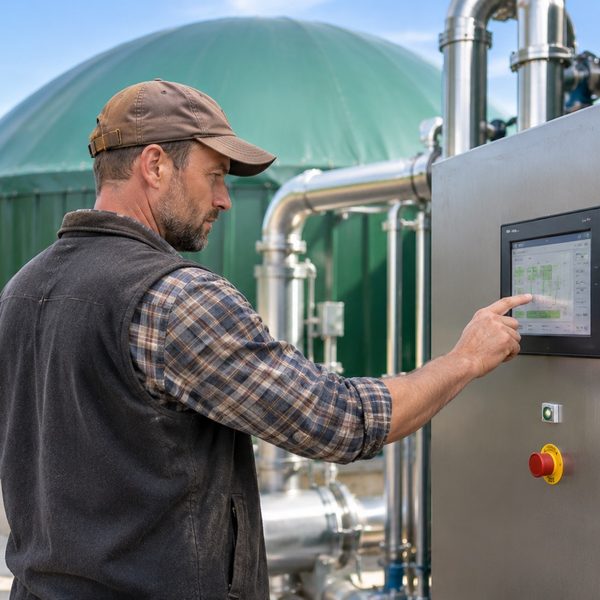
- Assess the farm: feedstock, energy use, site.
- Choose the system and size that fit.
- Get the permits and, if needed, the grid connection.
- Build and commission the plant.
- Run, monitor and maintain it.
Rules and permits
The rules depend on your country and region, and on the size of the plant. They usually cover planning, environmental protection, safety and how digestate can be used. It sounds like a lot, but most of it follows a clear process, and mapping it out is part of the planning.
What about the neighbours?
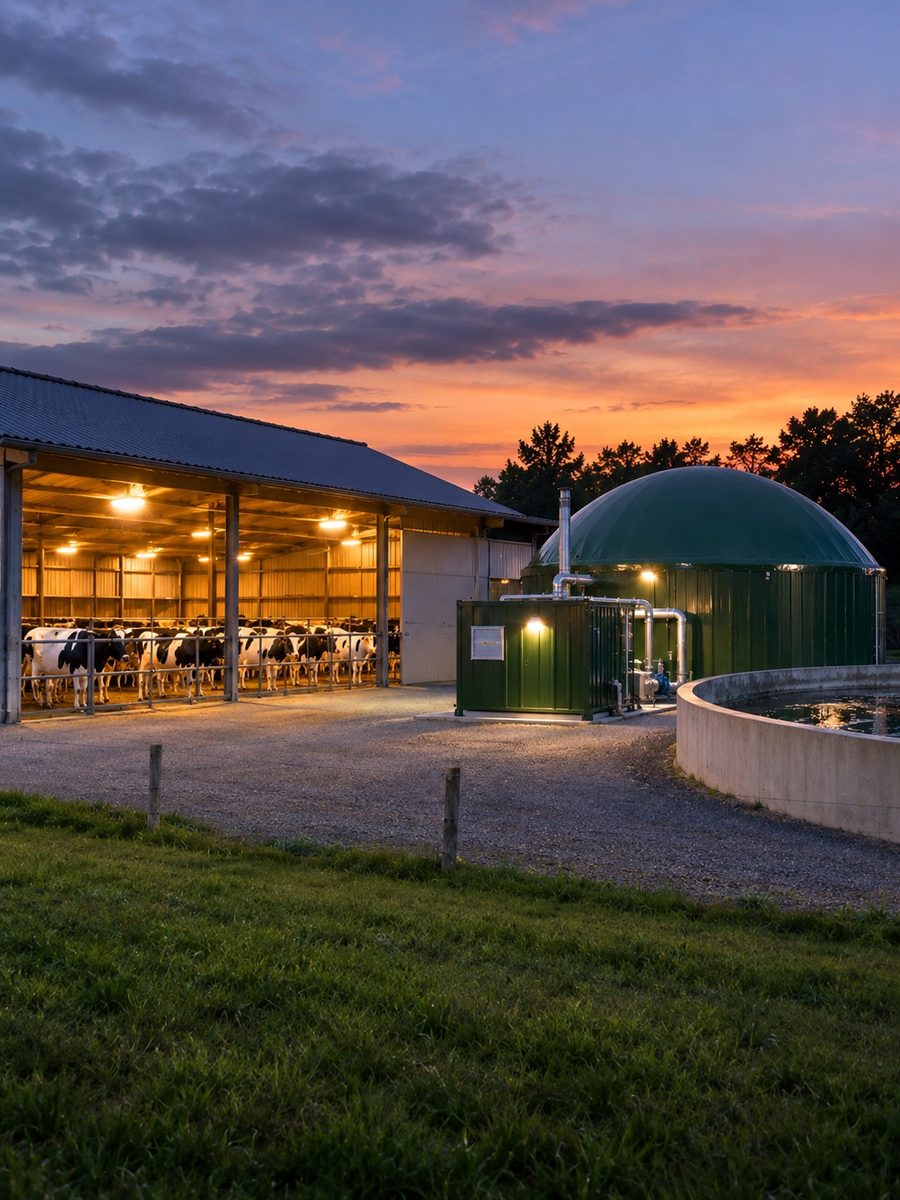
It's a fair question. The digester is sealed, and most odour on a biogas site comes from handling and storing material, so good design and good site choice matter. Talking to neighbours early, and explaining what will actually happen on site, usually helps more than anything else.