Guide
How anaerobic digestion works
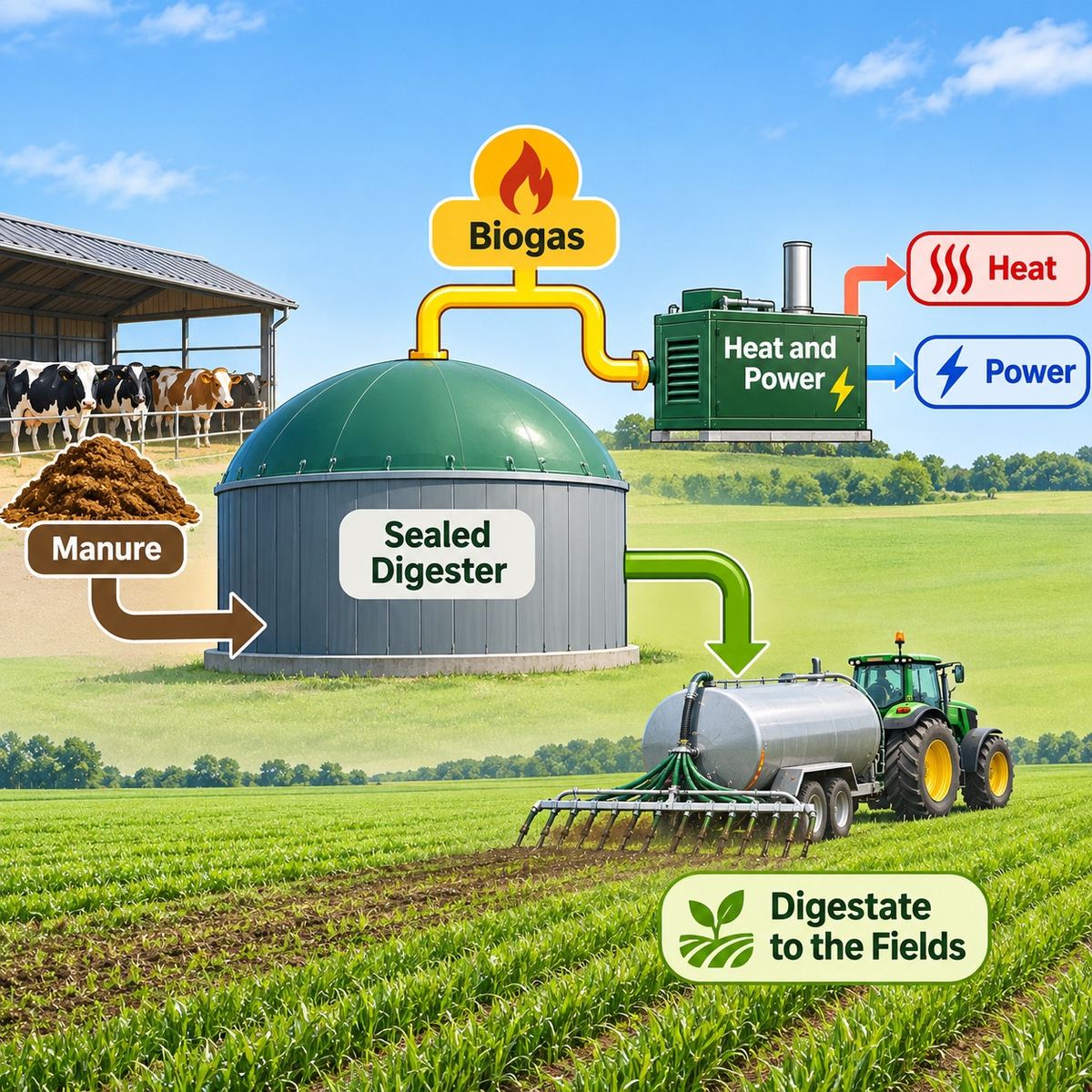
Anaerobic digestion is the natural process behind every biogas plant. Bacteria break down organic material without oxygen and release biogas. It happens in bogs, in a cow's stomach and in old landfills. An anaerobic digester simply puts it in a sealed tank and keeps the conditions right.
Anaerobic digestion in plain words
“Anaerobic” means without oxygen. When organic material like manure is sealed away from air, different groups of bacteria take turns breaking it down. The last group produces methane, which collects as biogas. What's left at the end is digestate.
The four stages of anaerobic digestion
- Hydrolysis. Large molecules like fats, proteins and fibres are broken into smaller pieces.
- Acidogenesis. Bacteria turn those pieces into simple acids and alcohols.
- Acetogenesis. Those are converted mainly into acetic acid, plus hydrogen and carbon dioxide.
- Methanogenesis. Specialised microbes turn them into methane and carbon dioxide. This is the biogas.
All four stages of the anaerobic digestion process happen at the same time inside the digester, each depending on the one before.
The bacteria behind it
The process relies on several groups of microbes working together. The methane producers at the end are the most sensitive: they need stable conditions, no oxygen and time. Keeping them healthy is the main job of anyone running a digester.
Temperature: mesophilic and thermophilic
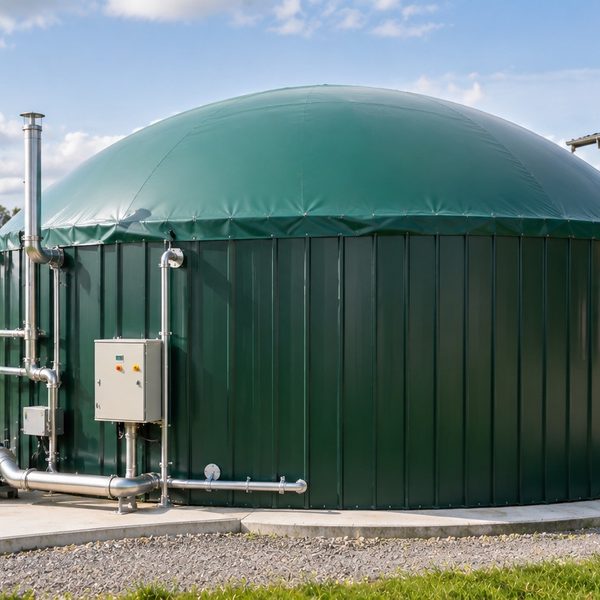
Digesters usually run in one of two temperature ranges:
- Mesophilic, around 35 to 40 °C. The most common choice: stable and forgiving.
- Thermophilic, around 50 to 55 °C. Faster, but more sensitive and needs more heat.
In colder climates the digester is insulated and heated, often with some of the heat it produces itself.
What keeps the process healthy
- A steady temperature
- No oxygen getting in
- A regular, consistent feed of material
- The right balance of nutrients, especially carbon and nitrogen
- Gentle mixing, so the bacteria reach the material
- Enough time: material usually stays in the digester for several weeks
Wet and dry digestion
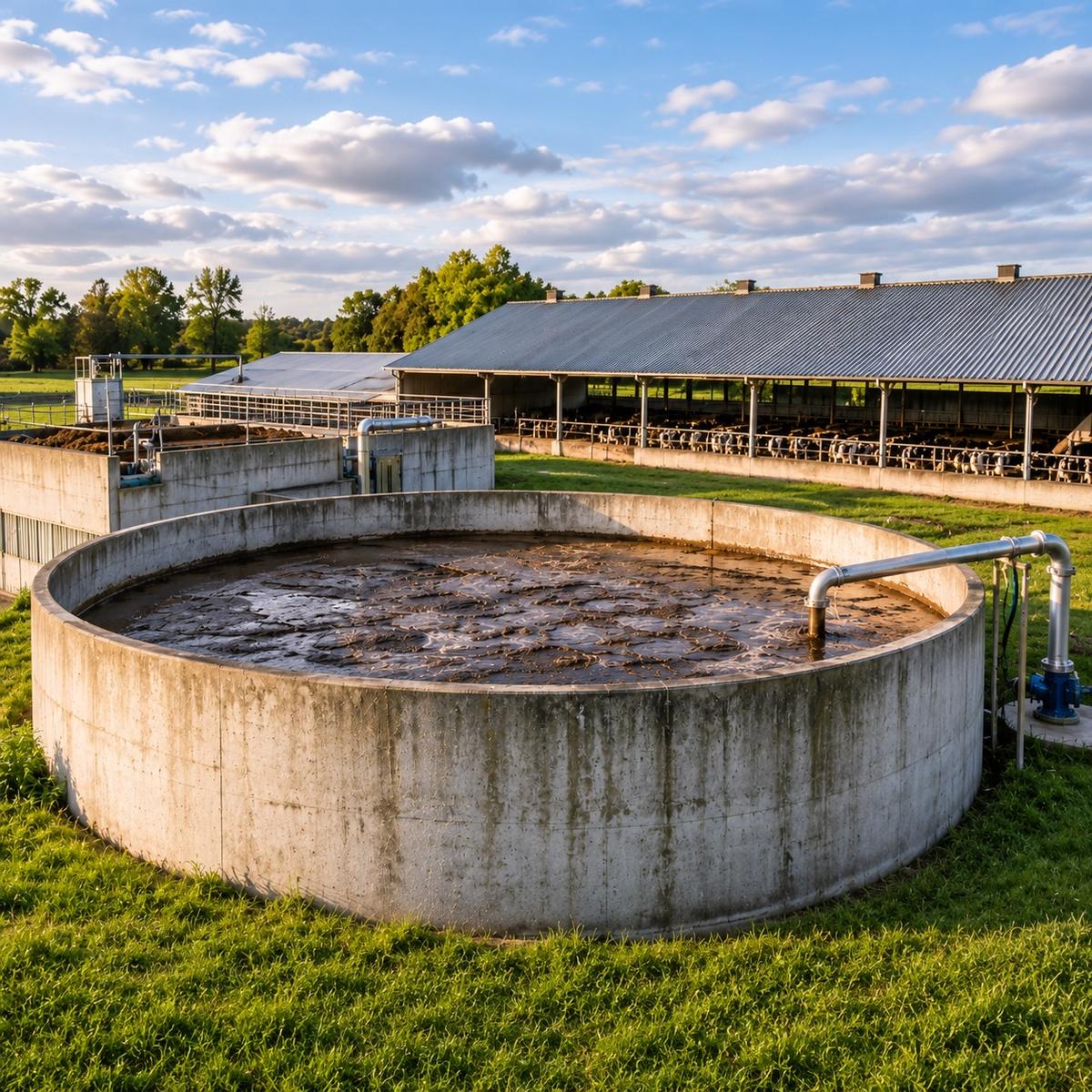
Wet digestion handles liquid material like slurry and is the most common on livestock farms. Dry digestion is built for stackable material like solid manure or crop residues. The right one depends on what your farm produces.
Anaerobic digestion vs composting
Both break down organic material, but in different ways. Composting uses oxygen, releases its energy as heat, and gives you compost. Anaerobic digestion happens without oxygen, captures the energy as biogas you can use, and gives you digestate.
What comes out: biogas and digestate
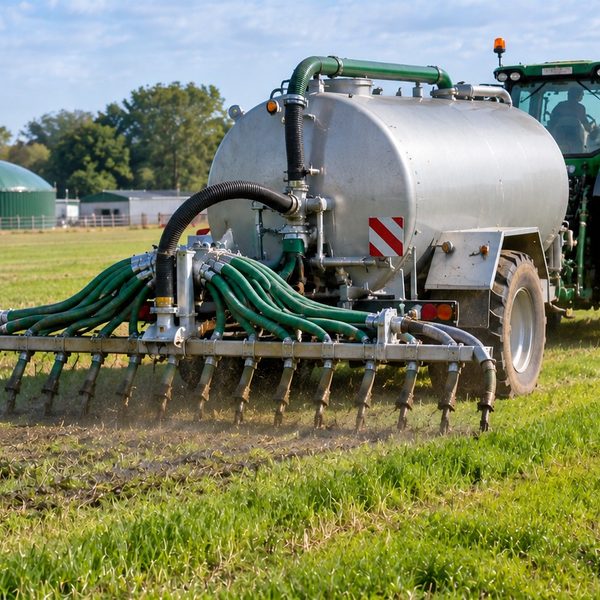
Biogas, mostly methane and carbon dioxide, is used for heat, electricity or upgraded into biomethane. Digestate keeps much of the nutrient value of the original material and can be used as fertiliser, within the rules that apply. Read more in our guide: What is a biogas plant?